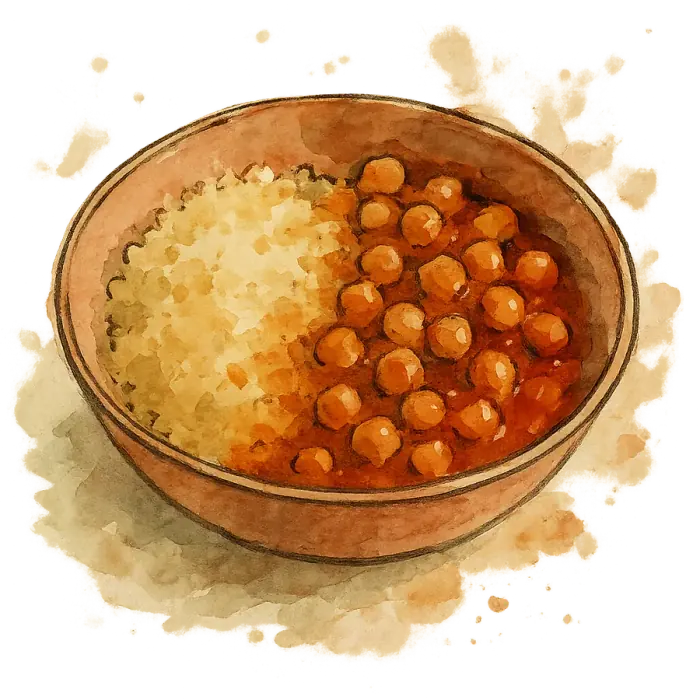
A watercolour of pale couscous beside chickpeas in a rust-red harissa and tomato sauce
Generated with OpenAI gpt-image-1
Adapted from North African chickpea and harissa tagine, in the quick stovetop form rather than the long-cooked one

Harissa chickpeas with couscous

An established dish converted to shelf-stable ingredients. Every substitution is documented below.

How long it keeps

About 6 months, set by Olive oil, though 1 of 7 ingredients has no sourced figure, so the real limit may be shorter.

Indicative, for planning a build before you buy. The answer for a pack you already own is the best before date printed on it, and that only holds if it has been stored as the label says.

Serves
2
Burners
1
Pans
1
Water
0.5 L
Active
10 min
Total
20 min

Ingredients

Harissa earns its place in a small box of ingredients better than almost anything: heat, acidity, garlic and roasted pepper in one jar, at about ninety grams. A spoonful does what a whole set of aromatics would otherwise do.

Couscous is the other half of the argument. It does not cook, it rehydrates off the heat, which means the burner is on for the stew only, and one portion is exactly as easy as four.

  1. Warm the oil, add the harissa and let it fry for a minute. Frying the paste rather than stirring it in at the end is the difference between it tasting raw and tasting cooked.
  2. Tomatoes in, then the chickpeas with about half their liquid. Simmer 10 minutes, pressing some of the chickpeas against the pan.
  3. While that goes, put the couscous in a bowl or mug with a pinch of salt and a splash of oil, and pour over 180 ml of boiling water. Cover with a plate and leave it alone for five minutes, then fork it through.
  4. Lemon juice into the stew off the heat. Taste for salt.

The ratio for couscous is roughly 1.2 times its volume in boiling water. Worth committing to memory: it is the same whatever quantity you are making.

Serves 2.

What this was adapted from

North African chickpea and harissa tagine, in the quick stovetop form rather than the long-cooked one

  • long-cooked tagine with fresh vegetables → a fifteen-minute stovetop stew

    A tagine builds sweetness by cooking down fresh onion, carrot and squash for an hour. None of that is available and the fuel cost would be prohibitive, so the dish leans instead on harissa and tomato, which arrive with their complexity already built in.