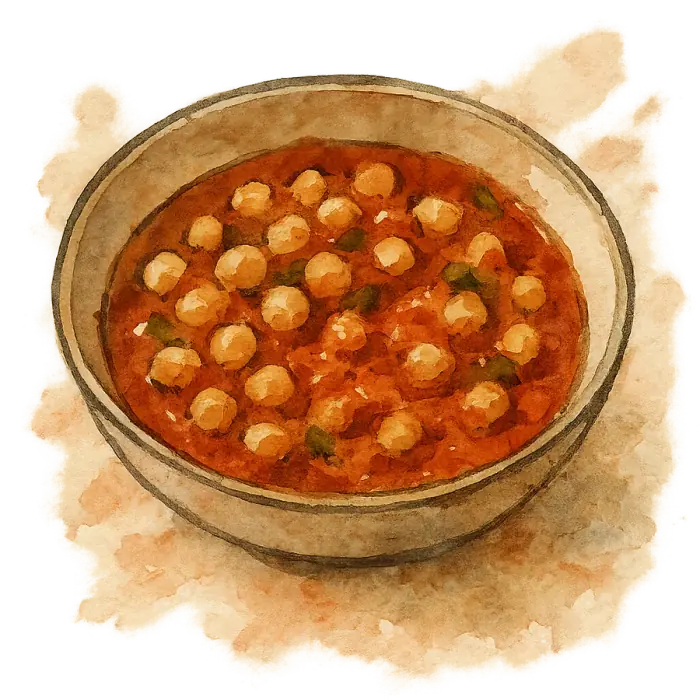
A watercolour of a bowl of chickpeas in a brick-red smoked paprika tomato stew
Generated with OpenAI gpt-image-1
Adapted from Garbanzos con espinacas

Smoky chickpea and tomato stew

An established dish converted to shelf-stable ingredients. Every substitution is documented below.

How long it keeps

About 6 months, set by Olive oil.

Indicative, for planning a build before you buy. The answer for a pack you already own is the best before date printed on it, and that only holds if it has been stored as the label says.

Serves
4
Burners
1
Pans
1
Water
0.3 L
Active
10 min
Total
30 min

Ingredients

Smoked paprika is the single most valuable spice in this kind of cooking. It supplies the thing tinned food most obviously lacks. The suggestion that something was cooked over fire, and it does it instantly, for almost no weight.

  1. Warm the oil in the pan and add the dried onion. Let it rehydrate and soften for two or three minutes; it will smell sweet rather than dusty when it is ready. This step is what stops dried onion tasting like powder.
  2. Add the garlic, smoked paprika and cumin. Thirty seconds, stirring, off the heat if the pan is fierce: paprika scorches easily and there is no coming back from it.
  3. Tomatoes in, then the chickpeas with about half their liquid. The liquid is starchy and it will thicken the stew.
  4. Simmer twenty minutes, pressing a few of the chickpeas against the side of the pan as you go. Those broken ones are what turn it from a soup with chickpeas in into a stew.
  5. Salt to taste, then the vinegar off the heat.

The vinegar at the end is not a garnish. Taste it before and after and you will hear the whole dish come into focus.

Serves 4 with bread, 2 as a main course on its own.

What this was adapted from

Garbanzos con espinacas: the Andalusian chickpea stew built on smoked paprika, cumin and sherry vinegar

  • fresh spinach → omitted, with the acid increased to compensate

    There is no honest shelf-stable substitute for wilted greens, so the dish does not pretend. Losing the spinach costs freshness, and a little more vinegar at the end puts back some of the lift it would have given.

  • sherry vinegar → cider vinegar

    Sherry vinegar is the authentic note and is not a UK store-cupboard staple. Cider vinegar is sharper and less nutty; used slightly sparingly it does the same job of cutting the fat.